




Game info
Pet collection, Adventure
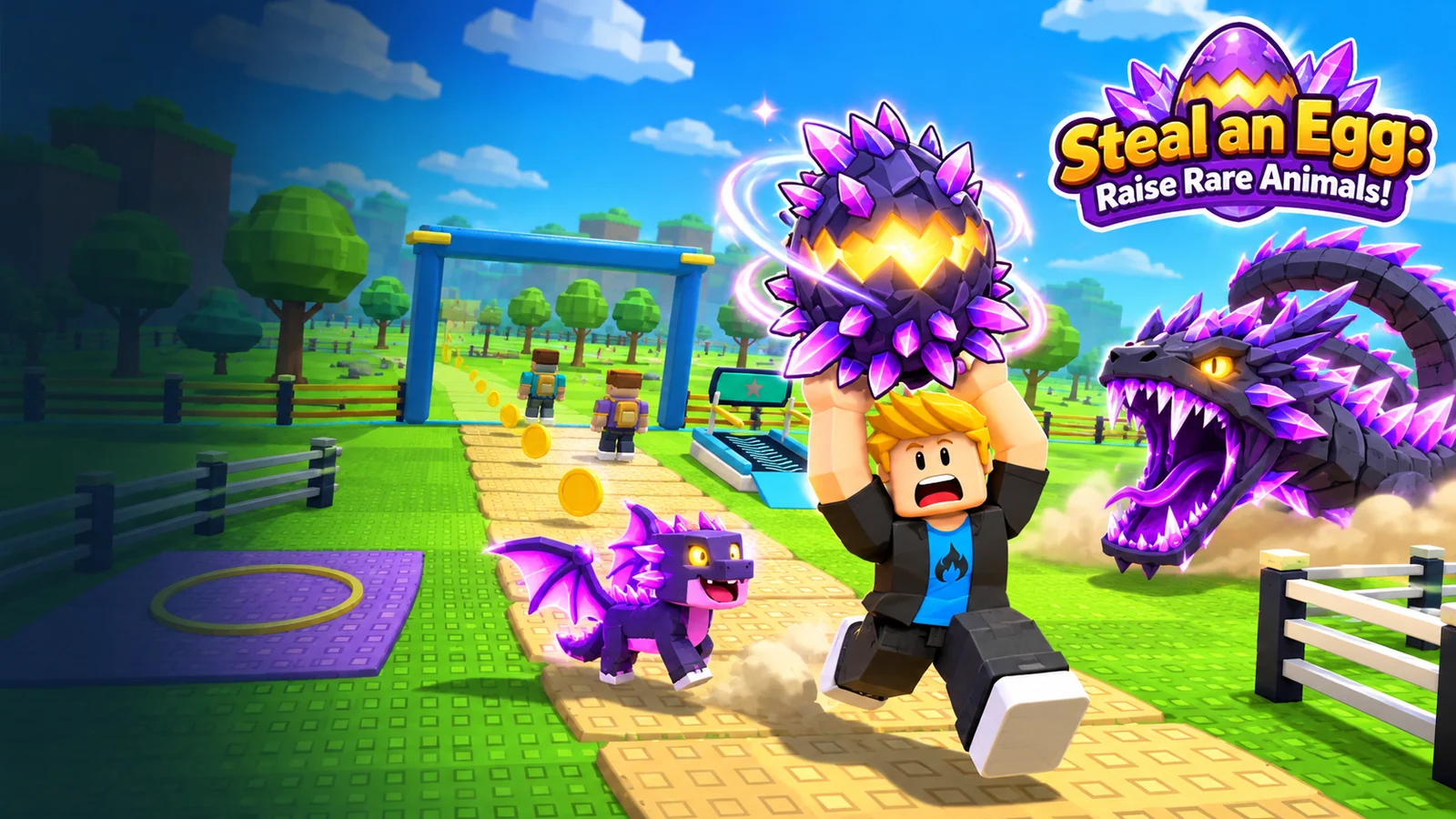
Steal eggs from guarded areas, escape with your find and raise animal companions at your base in Steal an Egg: Raise Rare Animals!, a colourful browser collection game.
About Steal an Egg: Raise Rare Animals!
Steal an Egg: Raise Rare Animals! is a browser collection game about taking eggs from guarded areas, escaping with them and developing a base of animal companions. The return journey matters as much as reaching the egg. A guardian can react to the pickup, so movement, camera control and a clear route back turn a promising find into a successful collection.
The quieter part of the game happens around the pens. Bring an egg to the relevant space, follow the hatching prompts and inspect the pets or collection choices that become available. The appeal comes from connecting those activities: a more confident trip outside supports a clearer goal at the base, and the next collection goal gives the following trip a purpose.

How to play Steal an Egg
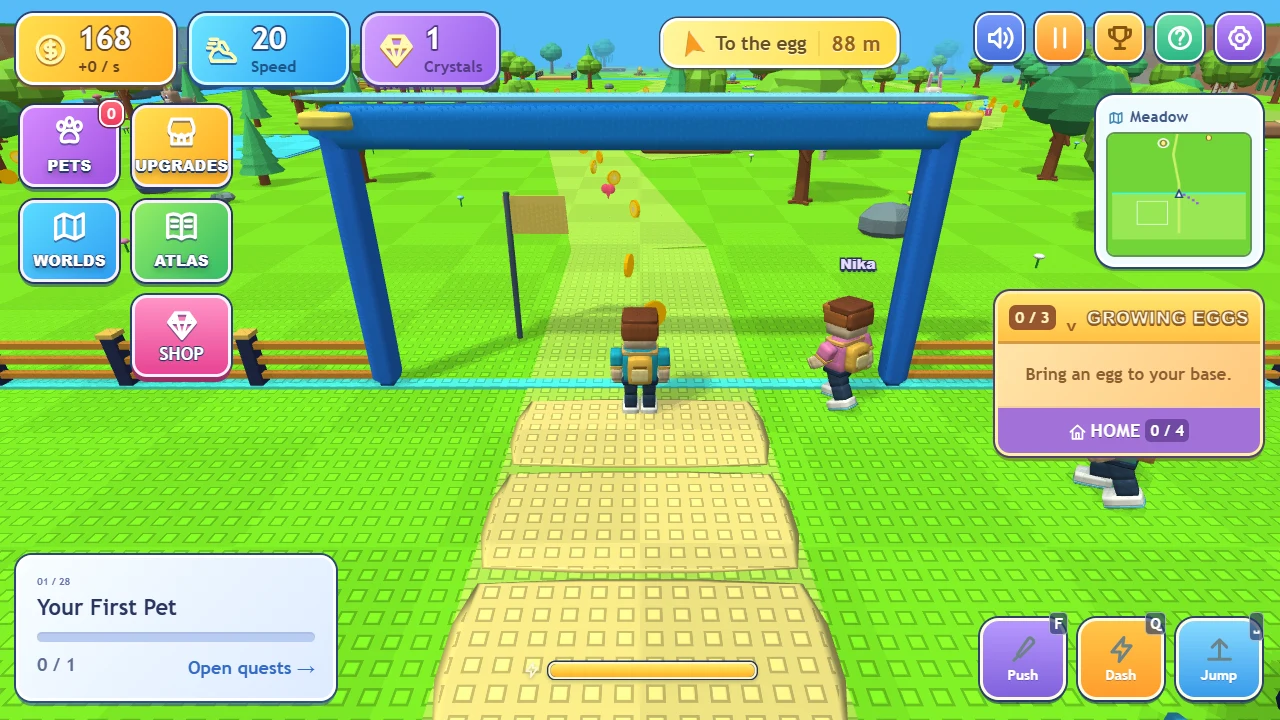
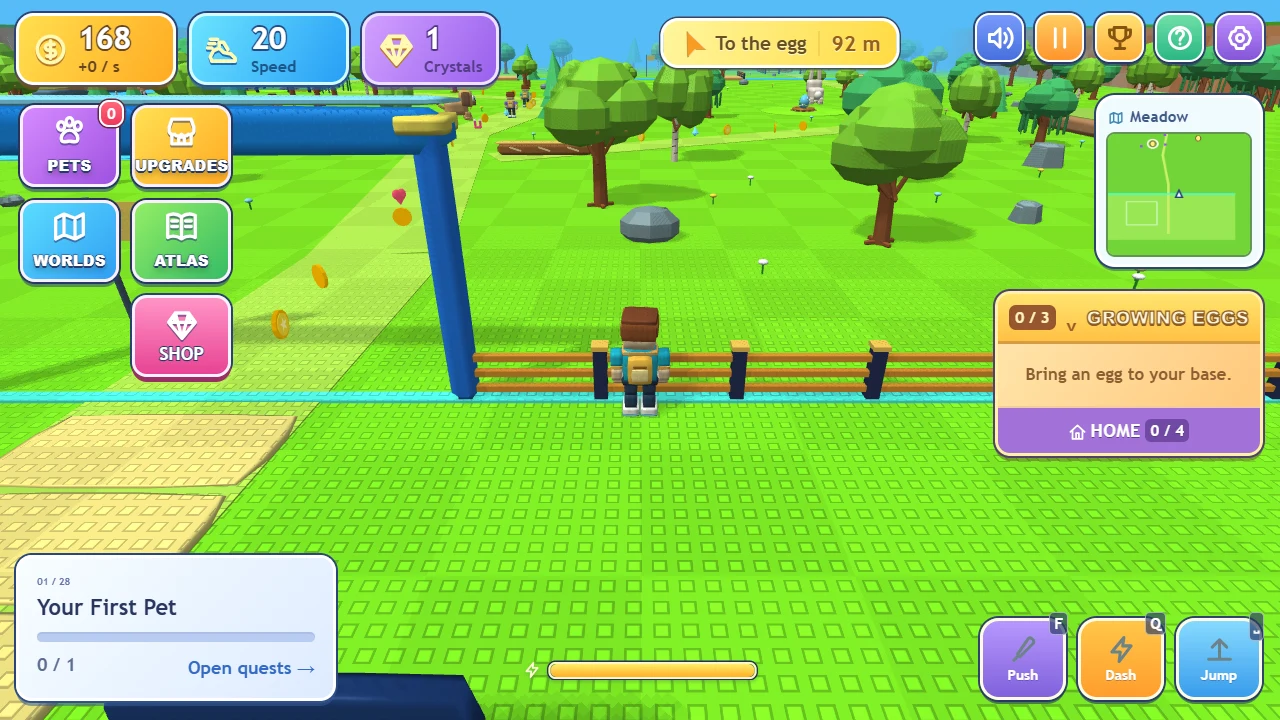
Begin in the base and locate the pens, route out and interaction prompts. Choose an approachable egg before attempting a distant target. Move towards it, use the displayed interaction and return along a path you can recognise. During a chase, keep the next turn in view and use movement abilities for a specific clear stretch rather than activating every input at once.
Once the egg reaches safety, read the pen and hatching information. Check the available space before making another trip. If a matching-pet combination or speed-training option is shown, inspect what it changes and what it consumes. The current game's prompts establish those rules; a similar pet game elsewhere may handle eggs, duplicates and progression differently.
Controls
- WASD: move around the world in the recorded desktop player.
- Mouse/right mouse: inspect and control the view as indicated by the game.
- Space: jump.
- E: use the relevant interaction prompt.
- Q: the recorded dash action.
- Shift: running in the recorded desktop controls.
Confirm the current on-screen controls before relying on an action during a chase. A browser game may update its interface, and a touch device needs the controls actually provided by that player. Use the opening area to learn movement and view separately before combining them while carrying an egg.
Features that shape the collection
The selected game brings together guarded egg pickups, a return to the base, pet pens and collection development. Matching animals and a speed-training option are among the recorded game features. Each serves a different decision. A faster trip can make another pickup practical, while a collection choice determines what the successful return is meant to support.
Do not judge progress only by the most colourful animal visible in another player's collection. A dependable route, a better understanding of a pen and a controlled use of a movement ability are also useful improvements. They make the next reward something you can pursue deliberately instead of an outcome that depends on an unexplained lucky escape.
First-session plan: finish one complete collection cycle
For the opening session, choose a modest pickup and learn the whole cycle from leaving the base to using the egg at a pen. Notice one recognisable landmark on the return path. If the trip fails, identify where direction or space became unclear and change that part before choosing a more distant egg.
Once the return works, inspect what the base lets you do next. Read a hatching or combination prompt rather than clicking through it automatically. The aim of this first cycle is understanding the relationship between a successful chase and the pet collection. A larger challenge is more interesting when it rests on those familiar steps.
Eggs, pets, merging and speed training
The selected Steal an Egg game connects several concrete activities. Eggs are found outside the base in guarded areas. A successful return leads to the pen and hatching interactions, while the resulting animals become part of the collection. Matching animals and a speed-training option are recorded features of this player. They affect different parts of the loop: collection choices at home and movement on the next journey.
Read the current combination prompt before using matching pets. Check which animals it consumes, what the result is and whether enough space remains for the next hatch. A familiar pet can be useful to keep, while a duplicate may support another collection decision. There is no need to assume that every pet game or Roblox experience uses the same rarity, income or merging system.
The treadmill is connected to an actual route
Speed training becomes meaningful when you test it on a journey you already know. Notice whether the character reaches the same landmark sooner and whether corners now need earlier attention. Faster movement can make a distant pickup more practical while also making a narrow route less forgiving. Keep that distinction in mind before treating every speed improvement as permission to pursue the farthest egg.
Use a successful collection cycle as a reference. If the next target is farther away, compare its guarded area, return route and the space available at home. Changing only one of those conditions gives the attempt a useful purpose. The goal is a collection built through journeys you can increasingly control, with the base giving each successful return a clear next step rather than simply another colourful animal on the screen.
Steal an Egg: Raise Rare Animals! and the collection loop
Steal an Egg: Raise Rare Animals! combines a risky trip outside the base with the quieter work of raising a pet collection. The egg is the link between those halves. Reaching it is only the first part of the task; you still need to carry it back while a guardian can interfere. Once the egg reaches safety, the base gives that successful trip a purpose through hatching and caring for the animals you collect.
Read the pen area before making a long trip. Identify where a carried egg should go and which spaces are available. Returning with a valuable find is less useful if you do not understand the next interaction. The opening area is also the safest place to learn how the camera moves, which key interacts with an object, and how a sprint or dash changes your movement. Test those inputs separately before trying to escape a pursuer.
Choosing an egg and planning the return route
The most tempting egg is not automatically the best first target. Compare the route into the area with the route back to your base. A doorway, narrow passage or awkward turn may be easy while approaching and harder while a guardian is following. Notice those constraints before picking up the egg. A successful easy return teaches you the entire collection cycle and can be more useful than repeatedly failing at a distant target.
Once a chase begins, concentrate on a route you can actually navigate. Turning the camera frantically can make a familiar path harder to recognise. Use landmarks such as the pen entrance, an open strip of ground or a distinctive building to maintain direction. The aim is to get the egg home, not to spend the whole chase looking at the pursuer. Choose a path with room to correct a turn.
Sprint, dash and the moment to use them
Movement abilities are most helpful when they solve a particular part of the route. A dash before a clear stretch may create useful distance; the same input just before a tight corner may leave less time to turn. Learn the range and recovery shown by the actual game rather than assuming that holding every movement key produces the fastest safe escape. Keep the next landing or turn in view.
If a guardian can be pushed away, treat that as a way to create an opening rather than an invitation to stand still indefinitely. Use the space to resume the return route. A failed attempt can reveal whether the problem was an unfamiliar input, a poor route or choosing an egg too far from safety. Changing only the relevant part on the next trip makes progress easier to judge.
Hatching, matching pets and making room at the base
Back at the base, inspect the information attached to an egg, pen or pet before spending a resource or combining animals. Collection games often ask you to choose between keeping a familiar animal and using matching animals to develop the collection. Follow this game's current prompts for what a combination consumes and what it produces. Do not assume that every colourful pet game uses the same merge rules.
Arrange the next trip around a clear collection goal. You might want another animal of a familiar kind, a different egg to explore, or enough progress to make a new area practical. Each gives the return journey a different value. A tidy understanding of the base is as useful as faster movement, because it tells you what to do with the reward when the exciting part of the chase is over.
Speed training and a more ambitious route
When a speed-training option is available, compare its effect on a route you already know. Familiar ground makes the change easier to feel. An improvement that shortens a clear stretch may still require different timing at the same corner. Keep camera control and stopping distance in mind before choosing a more distant egg simply because the character now moves faster.
Try increasing one challenge at a time: a slightly longer trip, a less familiar return path, or a more demanding pickup area. That gives a failed attempt a useful explanation. Jumping immediately to the hardest visible target can hide which part needs practice. The collection becomes more satisfying when a new pet represents a route or interaction you learned rather than an unexplained lucky escape.
Finding another game with the part you enjoyed
This website's wider collection includes pet games, obstacle courses, tycoons, collecting games and other block-style browser titles. If the chase is the best part of Steal an Egg, choose a game that emphasises escape and movement. If raising the animals is more appealing, look for a collection or base-development game. The individual descriptions and controls help distinguish those activities before opening another player.
Steal an Egg: Raise Rare Animals! is the featured browser game on this homepage. A block-like visual style does not by itself make a browser title an official Roblox experience. For the separate Roblox platform and its account help, use Roblox's official help centre. You can explore the browser collection here without treating progress, purchases or accounts from unrelated games as interchangeable.
Worked example: an egg that is reachable but hard to bring home
Imagine that a distant egg is easy to approach while the return path contains several tight turns. The pickup is only the first part of the task. Walk through the route in your mind and identify where the chase is likely to become awkward. A nearer egg with a clear return can teach the complete collection cycle more efficiently than repeated failed trips to the most tempting target.
Once the route is familiar, try one increase in difficulty. A longer clear stretch or a less familiar pickup area gives the next attempt a question to answer. Changing the target, the path and the movement ability all at once makes the result much harder to interpret.
Worked example: a successful return with no plan at the base
Before leaving, locate the interaction that will use the egg and inspect available pen space. A successful chase should lead to a recognisable next action. If hatching or combining is possible, read what the current prompt consumes and what it produces before confirming. The collection is a set of decisions, not just a count of colourful animals.
Choose whether the next trip supports a familiar pet, a different collection target or access to a new area. That goal helps explain which egg is worth pursuing and which resources should be kept for later. Avoid assuming that every pet or merge game treats duplicates in the same way.
A readable camera helps both halves of the game
Test movement and camera control near the base before carrying a reward through a chase. Use landmarks to preserve direction rather than watching the pursuer continuously. On a small screen, keep the important path visible and confirm whether the player supplies touch controls. Progress in an unrelated Roblox account or browser game is not automatically shared here. Use the current player's own save and account information when deciding how to return to a collection, and never provide credentials to an external reward page.
Related games
Frequently asked questions
What do you do in Steal an Egg: Raise Rare Animals!?
Collect an egg from a guarded area, bring it back safely and use the base’s pen and hatching interactions to develop a collection of animal companions.
What should I learn before attempting a difficult egg pickup?
Learn the movement, camera and interaction controls near the base. Identify a return route and a place for the egg before entering a more demanding guarded area.
How do I use a dash or sprint effectively?
Use it for a clear part of the escape route. A movement burst before a tight turn can make the next action harder, so learn the current ability’s behaviour in an open area first.
What should I check before combining pets?
Read the current interaction prompt, including which animals or resources it uses and what it produces. Similar collection games do not necessarily use the same rules.
Does this browser collection use my Roblox account progress?
The featured title is an independent browser game. Accounts, purchases and progress in unrelated Roblox experiences are not automatically shared with it.
How can I choose another game from this collection?
Use the game categories or search. The collection includes pet games, obstacle courses, tycoons and other block-style browser titles, each with its own player and description.
Good game? Tell us.0
Share a tip, celebrate a high score, or tell us what you think. Keep it friendly.